Designing a patient support program is one of the most consequential decisions companies make as they prepare to bring a therapy to market. Yet for many first-time launch organizations, the path forward is complicated, with numerous program decisions taking shape years before coverage realities and patient access dynamics are fully understood.
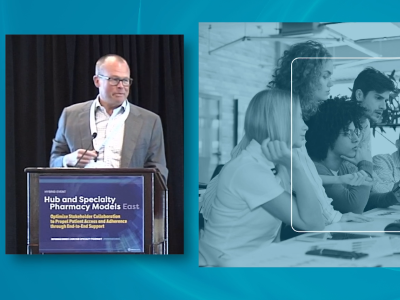
CareMetx recently hosted a webinar with the First Time Launch Alliance exploring how biopharma companies can future-proof their patient support programs in an evolving access landscape. The session featured Chief Growth Officer Shabbir Ahmed, SVP of Account Management Erin Kholodovsky, and Program Strategy Lead Nora Zakaria. Together, they bring decades of combined experience supporting organizations through patient services strategy, program design, and commercial launch planning across a wide range of therapeutic areas.
One theme that surfaced repeatedly is that effective patient support programs are designed intentionally around the specific barriers patients and providers are likely to encounter throughout the specialty therapy journey. Coverage questions, affordability challenges, and the operational complexity providers face when navigating reimbursement and prescribing requirements can all interrupt momentum along the treatment path. Programs that anticipate these realities, rather than reacting after delays occur, are far better positioned to help patients start and remain on therapy.
Program structure was also discussed as a strategic decision—one that influences how effectively patient support operates over time. Internal, external, and hybrid models each offer advantages depending on an organization’s expertise, pipeline strategy, available resources, and desired level of control over patient relationships and program data. The most successful launch teams approach this as a program design decision tied to long-term commercial strategy, not simply a vendor selection exercise.
Another key topic of discussion was how automation and artificial intelligence can be applied to improve operational efficiency. The most practical approaches focus on targeted use cases that streamline program operations today, while recognizing that more advanced capabilities depend on strong underlying data infrastructure and governance.
If you’re preparing for an upcoming launch or evaluating how to structure patient support for a therapy, the full conversation offers additional perspective and practical guidance. Watch the webinar here to explore the discussion and hear the audience Q&A.


 CareMetx
-3.png)

 CareMetx : Jan 8, 2025, 6:05:11 PM
-2.png)